
San Francisco County · Areas we serve
Property Management in San Francisco
San Francisco is the most regulated rental market in the region and the one where an administrative mistake costs the most. It is also where a large share of the units we manage sit.
The housing stock in San Francisco
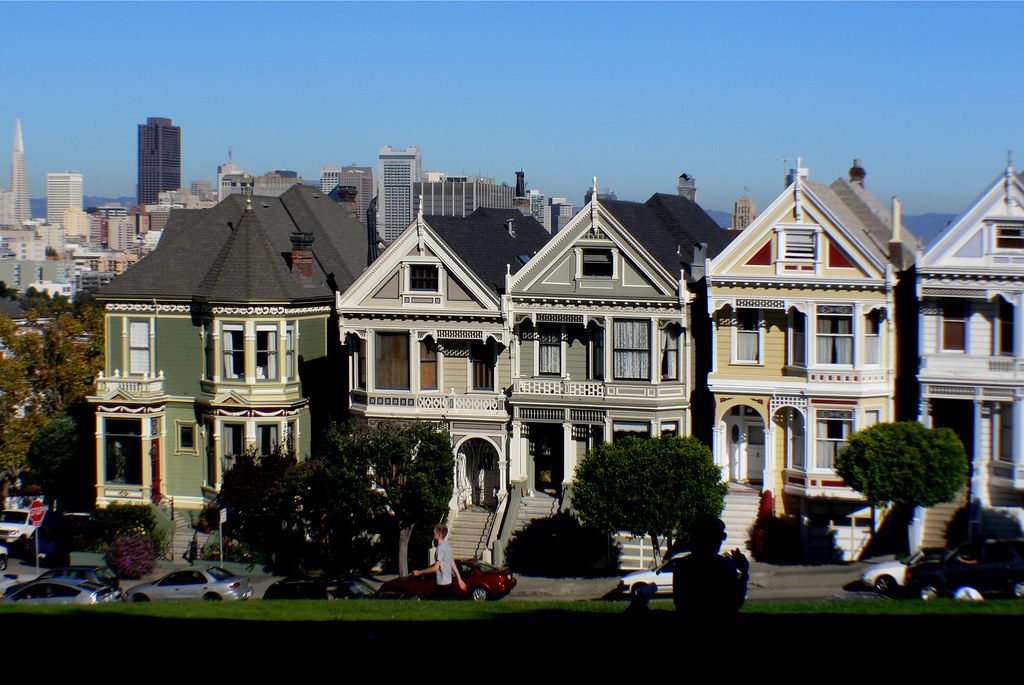
San Francisco's rental stock is old, dense and largely pre-war. Edwardian and Victorian flats subdivided into two, three and four units define wide stretches of the Mission, the Haight, Noe Valley and the Richmond. The Marina and parts of the Sunset run to 1920s and 1930s apartment buildings over ground-floor garages — the classic soft-story configuration. The Tenderloin, Nob Hill and Russian Hill hold larger pre-1940 apartment buildings, many with original plumbing risers and shared heating.
Anything built after the late 1970s behaves differently, both physically and legally. South of Market, Mission Bay and Dogpatch contain most of the city's modern construction — mid-rise and high-rise condominiums, many owned individually and rented out, with association rules layered on top of city ones.
For owners, that age distribution is the defining fact. Most San Francisco buildings are old enough to be rent-regulated and old enough that their major systems have already been replaced once — or are overdue.
Neighborhoods and districts
Most relevant property types
- Apartment Buildings — Five units and up, including older buildings with shared systems.
- Small Residential Buildings — Two to four units — the most under-managed properties we see.
- Condos & Townhomes — Your unit managed, and the HOA layer handled alongside it.
Regulatory context
What governs rental property in San Francisco
San Francisco has its own Residential Rent Stabilization and Arbitration Ordinance, administered by the Rent Board, layered on top of California law. Price controls generally reach buildings first issued a certificate of occupancy before June 1979, while the ordinance's just cause eviction protections extend more broadly than its rent limits do — including to many buildings that are not rent-controlled for price.
State law interacts with this in ways that are not intuitive. The Costa-Hawkins Rental Housing Act removes single-family homes and individually-owned condominiums from local price control, and the statewide Tenant Protection Act may then apply to units the local ordinance does not reach. Which regime governs your building depends on its construction date, its form of ownership and its location.
Beyond rent, San Francisco imposes obligations most owners underestimate: annual unit registration and reporting, specific and unforgiving notice requirements, rules governing buyout negotiations, and detailed procedures for capital improvement pass-throughs. Deadlines here are real, and missing one is expensive.
This information is general and for educational purposes only. It is not legal, tax, insurance, or financial advice. Rental regulations change frequently and vary by property. Consult a qualified attorney about your specific situation. Content last reviewed September 2026.
Compliance support
We identify which rules reach your specific property, administer the notices and deadlines that follow, and coordinate with your attorney when a matter needs legal judgment.
How compliance support worksOwner concerns
What San Francisco owners deal with
Which regime applies
Confirming whether the Rent Ordinance, the Tenant Protection Act, or neither controls a given unit — before a rent increase or notice goes out.
Registration and filing deadlines
Annual obligations tracked on a calendar rather than remembered.
Notice defects
Notices prepared and served correctly. A defective notice can void the action it was meant to accomplish.
Aging building systems
Pre-war plumbing, knob-and-tube remnants, and original sewer laterals identified and planned for.
Soft-story and seismic requirements
Mandated retrofit obligations on qualifying wood-frame multi-unit buildings tracked against city deadlines.
Long-tenured residents
Managing decades-old tenancies where the relationship, the documentation and the rent history all matter.
Market context
Renting in San Francisco
San Francisco rents are highly neighborhood-specific and sensitive to transit, hill grade and parking in ways that surprise owners from elsewhere. Two similar units eight blocks apart can support meaningfully different rents.
Demand is also more seasonal than the city's reputation suggests, and unit-specific factors — light, a shared wall, stair count, in-unit laundry — often move the achievable rent more than the neighborhood name does.
Free Rental Analysis
What should your San Francisco property rent for?
We price from comparable leases in the actual San Francisco submarket, not a citywide or regional average — and we show you the comparables and the reasoning.
Questions
San Francisco owner FAQs
Is my San Francisco building rent-controlled?
Generally, buildings first issued a certificate of occupancy before June 1979 fall under the Rent Ordinance's price limits, but single-family homes and individually-owned condominiums are typically exempt from price control under state law, and just cause eviction protections reach further than the rent limits. The answer for your specific building depends on its records, and we confirm it at onboarding rather than assume it.
What is a soft-story building and does mine qualify?
Soft-story buildings are typically wood-frame multi-unit structures with a weak ground floor — commonly open garage or retail space beneath living units. San Francisco has required seismic retrofit of qualifying buildings under a mandatory program with compliance deadlines. Whether yours is on the list is a matter of public record, and we check it as part of taking on a building.
Can I raise the rent on a long-term tenant?
In a rent-controlled unit, annual increases are limited to an allowable amount set each year, with certain additional increases available only through specific petition processes. In a unit not covered by local price control, statewide limits may still apply. In every case the increase must be noticed correctly, and an improperly noticed increase can be invalid.
Do you manage buildings in every San Francisco neighborhood?
We manage across the city with concentration in the western and northern neighborhoods and along the Peninsula corridor. If your building is in San Francisco, it is within our service area.
Schedule a Consultation
Managing property in San Francisco?
A short conversation is usually enough to tell whether we’re the right fit. We’ll ask about the property, what’s working and what isn’t, and tell you honestly what we would do differently.